
Apps & Software
When a website is not enough, I build the thing that runs the place.
Client portals, dashboards, quoting tools, booking systems and payment workflows, built around how your business actually works instead of how someone else's software thinks it should.
- Builds from $5,000
- Paid in three stages
- You own the code
- Built and run in Bandon
What gets built
Not a bigger website. A tool your business runs on.
Most of what I build replaces a spreadsheet, a shared inbox, a paper diary, or a monthly subscription to something that almost fits. It lives in the browser, works on a phone, and is shaped around your actual process.
Portals & accounts
Client and member portals, customer accounts, and administrative systems. People sign in, see their own records, and do the thing you are currently doing for them by email.
Sign-in, roles, recordsHow it works →Operations tools
Internal dashboards, quoting and estimating tools, booking systems, automated reminders, and the workflow systems that move a job from enquiry to invoice without anyone retyping it.
Quote, book, remind, trackHow it works →Payments & platforms
Payment workflows, subscription software, marketplace platforms, and custom web applications that take money on a schedule without a third party taking a cut of every transaction.
Stripe, subscriptions, native appsHow it works →Working with what you have
Connecting tools you already use, moving data between them, or putting a usable interface on something you already pay for. Often cheaper than replacing any of it, and worth raising on the consult.
Integrations and interfacesHow it works →Before you spend anything
Plenty of people who ask for software need a website.
Software costs several times what a website costs and takes several times as long. So the first thing worth settling is which one you actually need. I will tell you straight, and I lose the bigger job about as often as I win it.
If people mainly need to find you, understand what you do, trust you and get in touch, a website covers it. A contact form, a booking add-on and a payment button go a very long way. That is $649 to $2,499, live in days rather than months.
Software earns its place when someone has to sign in and see their own information, when availability or stock has to be real rather than a form submission, when money moves on a schedule, or when a job has stages that someone is tracking by hand.
If the thing you want could be done by a person with a spreadsheet and enough hours, and that is fine, keep doing it. Software earns its cost when the hours have become the problem, or when the spreadsheet is now three spreadsheets and nobody trusts any of them.
If the cheaper thing will do, I will tell you on the consult, before you have paid anything. A quoting tool nobody uses is worse than the notepad it replaced.
Step one
Discovery and scoping. $599.
Nobody can quote a custom build honestly from a phone call, and anyone who does is guessing. Discovery is the paid piece of work that turns your idea into something that can actually be priced, built, and argued with. It is a 90 minute session, in person if you are close enough or over the phone if you are not, and your written specification arrives within 5 business days of it.
Not what the software should do yet, but how the work moves through your business today, including the awkward parts and the exceptions everybody works around.
Which is mostly deciding what version one is not. The fastest way to sink a software project is to try to build all of it at once.
Within 5 business days of the session. What it does, what it deliberately leaves out for now, how the pieces fit together, what it will cost, and roughly how long. Plain language, not developer shorthand. I will walk you through it rather than leaving it in your inbox.
Take it somewhere else or decide not to build at all, and you still keep it. You paid for it. Commission the build with me within 60 days and the $599 comes off your first payment.
Changing your mind later. Small changes are part of the work. Anything that meaningfully changes what the spec describes gets quoted before I build it, so the cost never moves without you agreeing to it first. That is the other reason the spec is worth paying for. The $599 itself is not refundable once the spec is delivered, because the spec is the thing you paid for, and it is yours to keep or to take elsewhere.
Ready to scope it? Discovery and scoping.
A 90 minute session, then a written specification you own, whatever you decide afterwards. Credited toward your build if you go ahead within 60 days, which makes the real cost of starting a $5,000 project $1,401.
What it costs, and when
Builds start at $5,000, paid in three stages.
Final pricing comes out of discovery and depends on scope. What does not change is how it is paid: never everything up front, and never everything at the end.
$2,000 on a $5,000 build, or $1,401 if discovery is being credited. This books your slot and covers setup and the first stretch of work.
Invoiced when I hand you a working build to use and pick apart, not when you have finished approving it. Your feedback has its own time; my invoice does not sit waiting on it.
Settled before the software goes live, and before the code and accounts transfer to you.
The written spec. Already done if you started there.
The working version of what the spec describes. You see progress as it happens rather than at the end.
You use it properly, on real work, and tell me what is wrong. Revisions happen here.
It goes live, and the code, repository and accounts become yours.
How long the whole thing takes depends entirely on scope, which is exactly why discovery comes first. What I will not do is give you a timeline before I know what I am building. Once the spec is written, the schedule comes with the quote, and I hold to it.
What you get
Yours, running, and possible to leave.
- You own it outright
- Code, repository and accounts transfer to you on final payment, along with documentation written for someone who is not me. Another developer can pick it up. No licence to keep paying, nothing held back, nothing built to trap you.
- Sign-in done properly
- Accounts, roles and permissions, so the right people see the right things. Passwords hashed, sessions handled correctly, no shortcuts on the part that protects your customers.
- Payments through Stripe
- Cards, subscriptions and recurring billing. Card details never touch your servers or mine.
- Web app or native app
- Most business tools work best in a browser: nothing to install, no app review queue, and a fix ships the same hour. Native iPhone and Android apps when you genuinely need the stores, quoted after discovery. Deciding which you actually need is part of discovery.
- Native apps include upkeep
- Apple and Google change things every year, and an app nobody maintains usually stops working within about two years. Native builds include a required maintenance plan, quoted with the build, covering new phones and OS versions and resubmission when the stores ask for it. Developer accounts are registered in your name.
- Hosting and maintenance
- Set up and running before handover, on infrastructure you control. Ongoing support is optional and quoted with the build. Nothing about your software depends on staying with me.
I did not just build this for someone else. I run it.
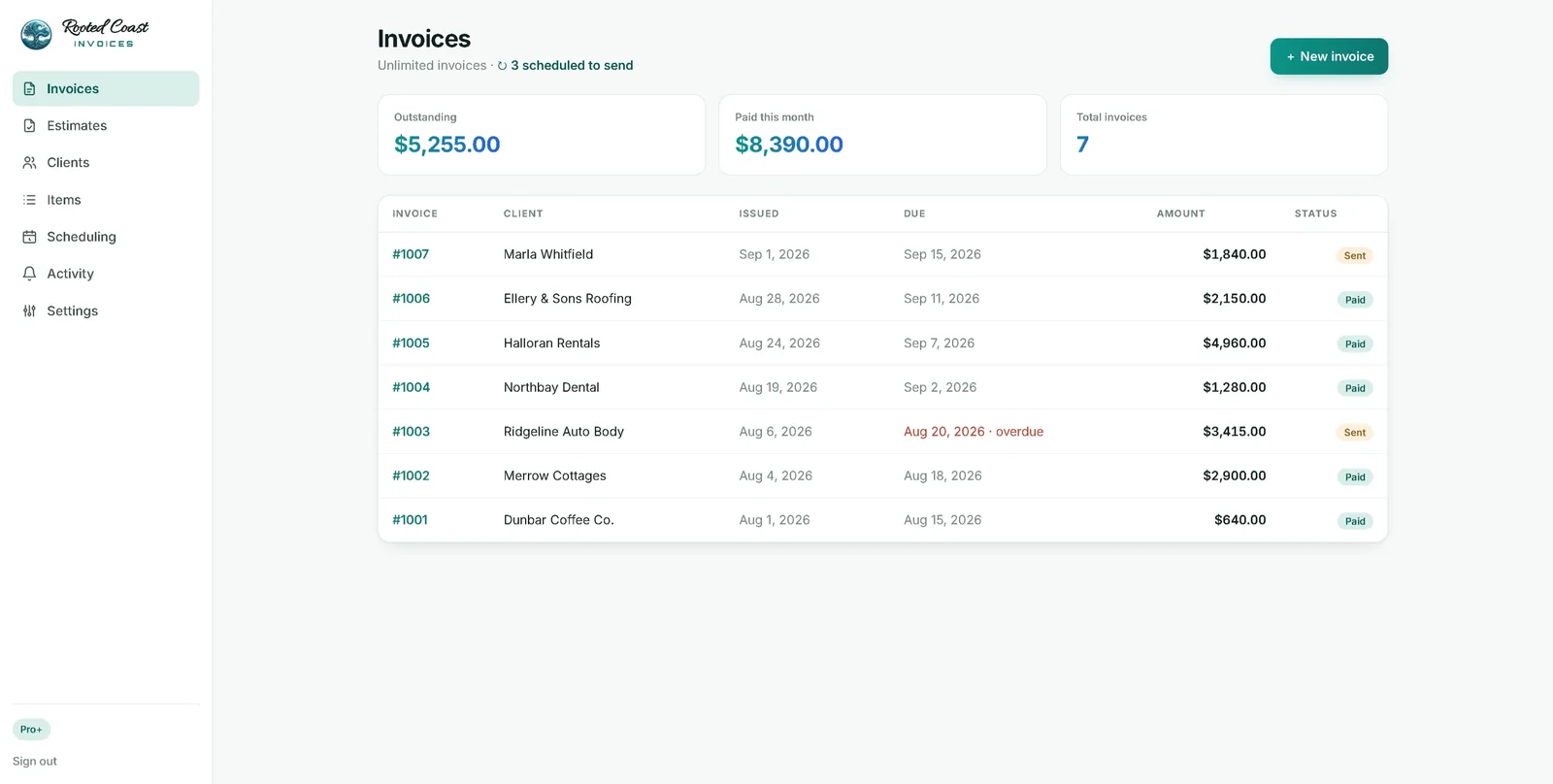
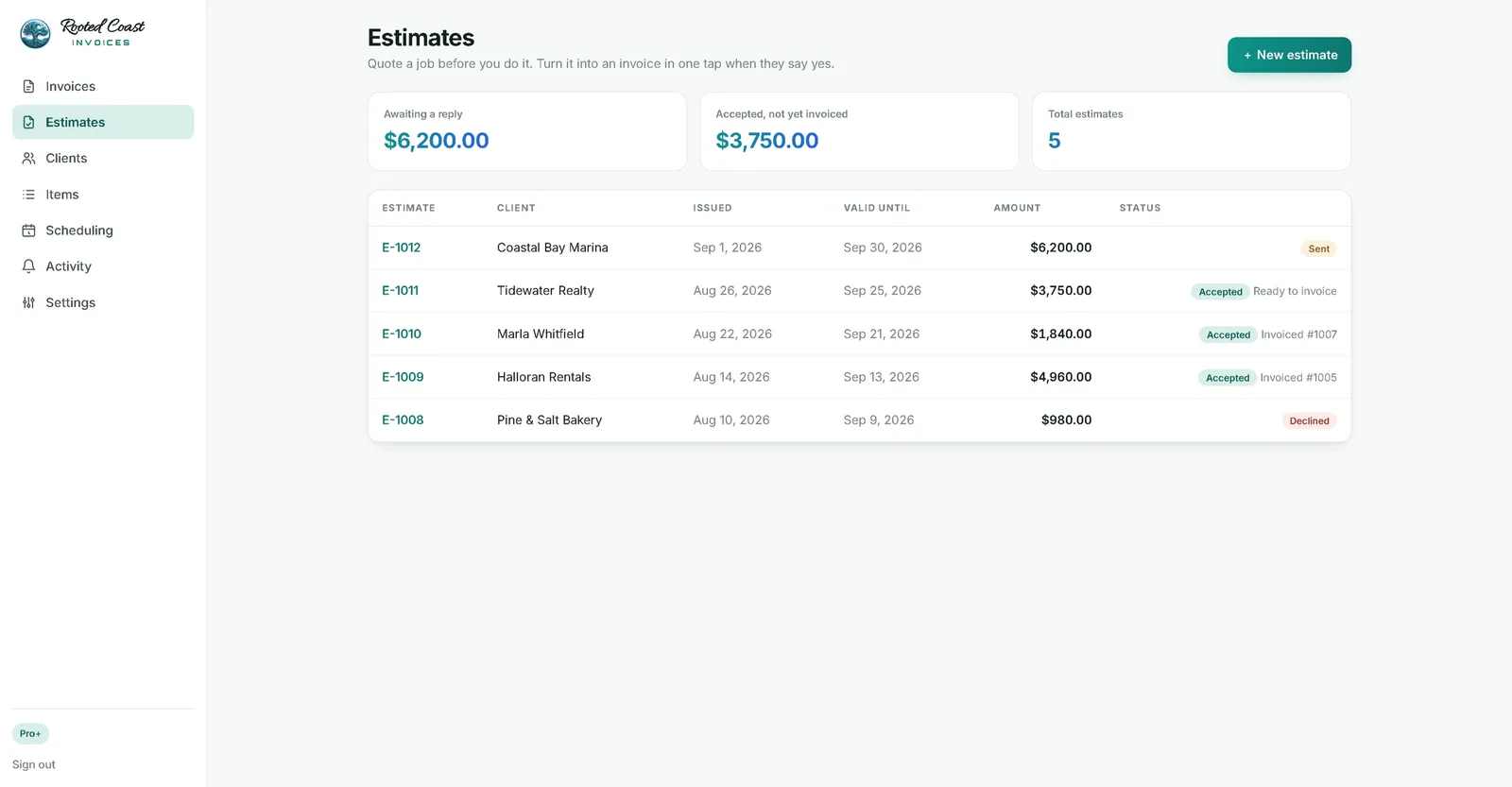
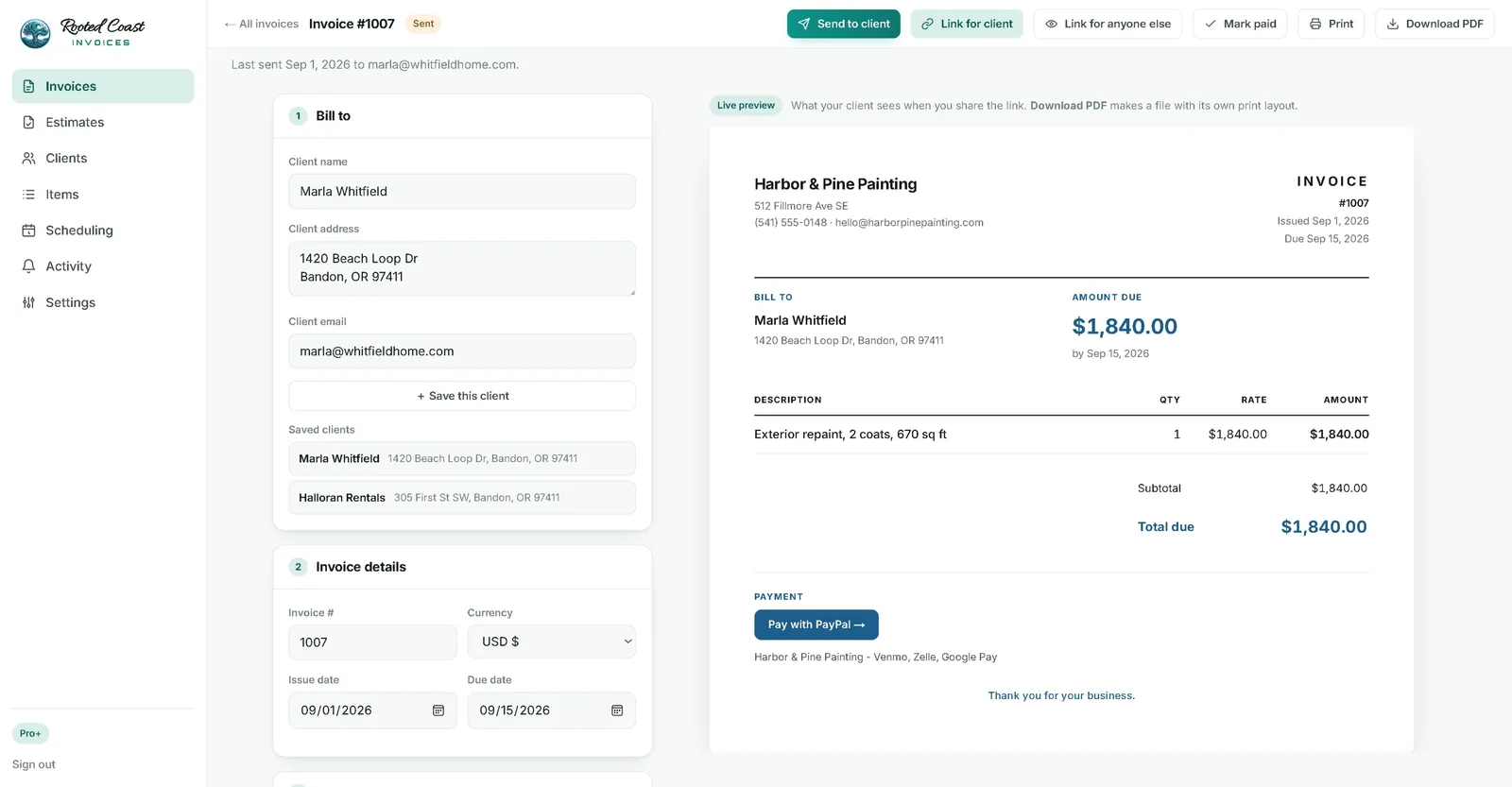
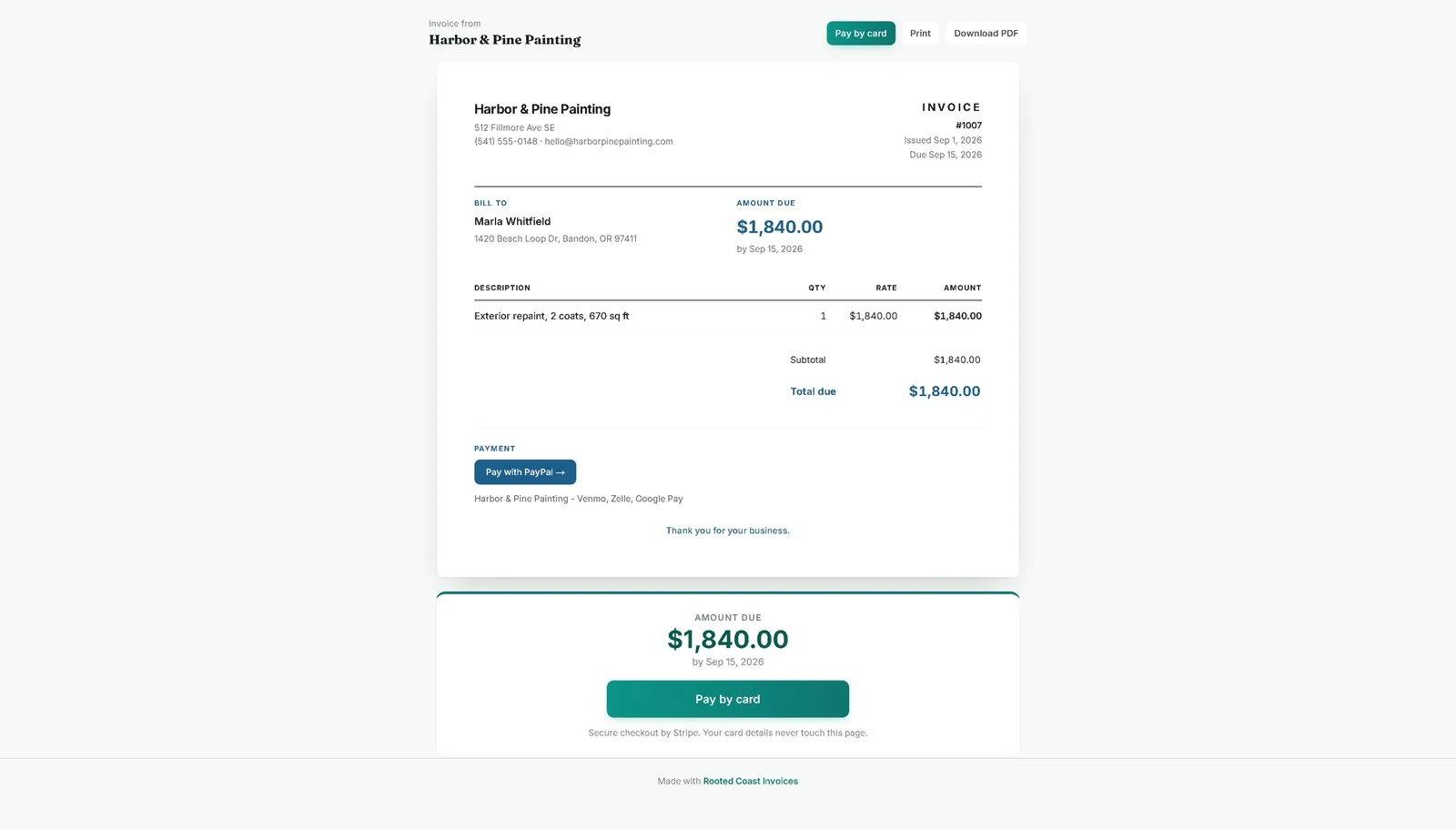
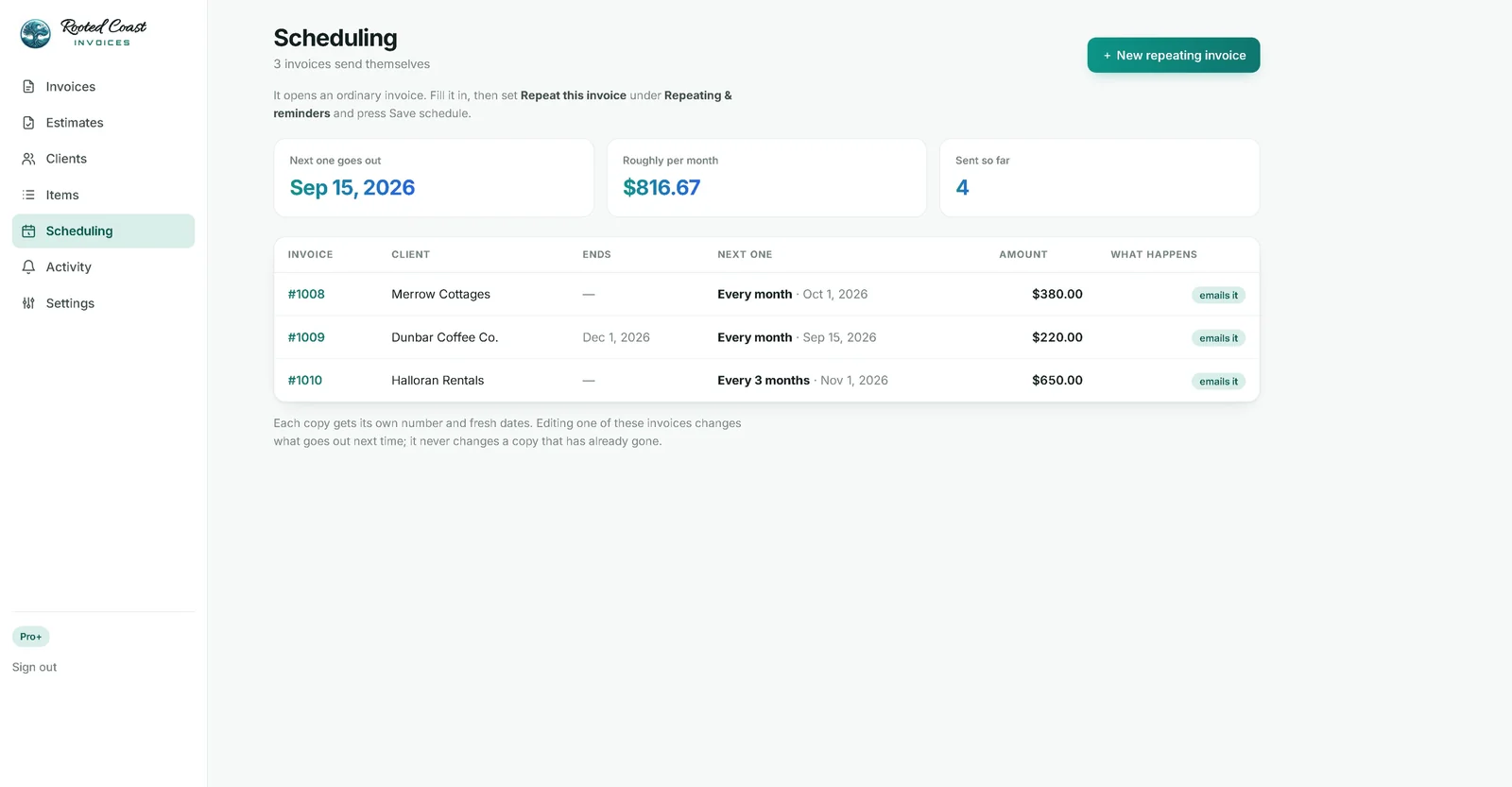
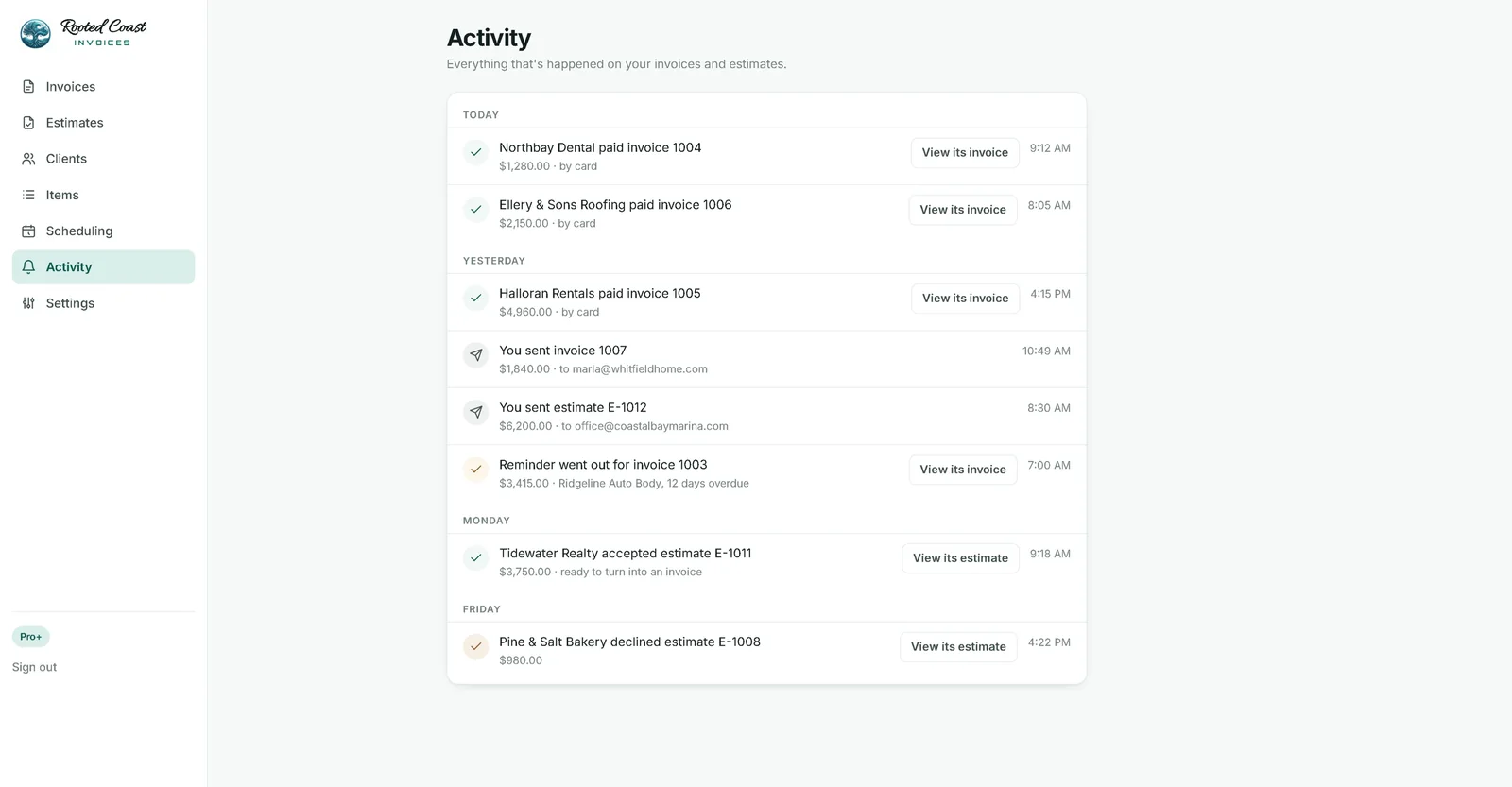
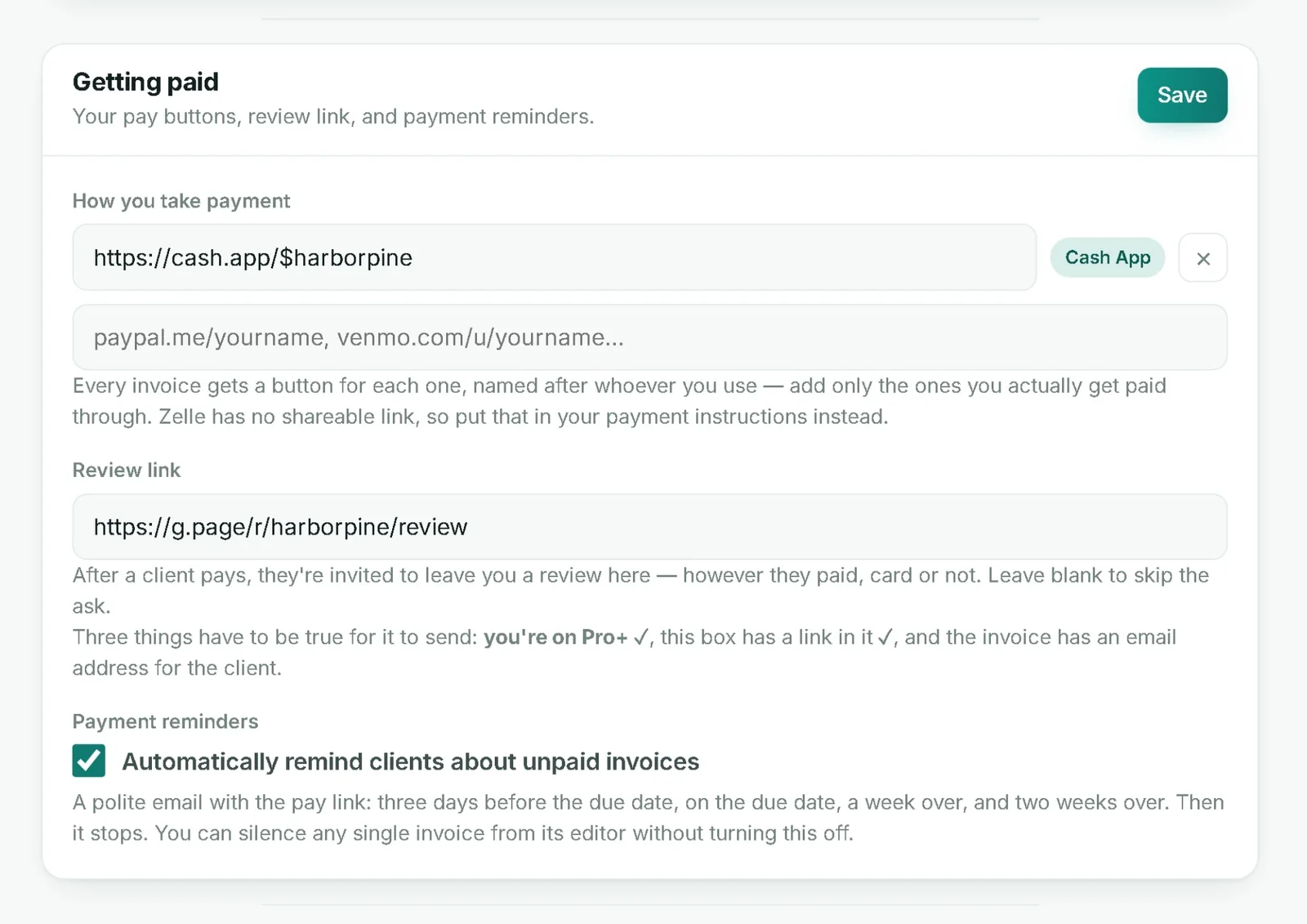
Rooted Coast Invoices is my own product, live today with paying subscribers. It is the same kind of build I am describing on this page: sign-in, real records, Stripe payments, recurring billing, automated email. Not a demo, not a case study from a portfolio, an actual product with actual customers that you can go and use right now.
Every problem in that list is one I hit myself, which is the point. When you describe the awkward part of your own process, I have probably already argued with a version of it.
Describe the awkward part. I will tell you what it takes.
Fifteen minutes on the phone, no charge and no pitch. If a website covers it, I will say so. If it is a real build, you will leave the call knowing roughly what it costs before you have spent anything.